
About the same maybe longer.
5 Likes
So the red one is the CAT and black is the ETQ?
2 Likes
Thx @Scoutbob .
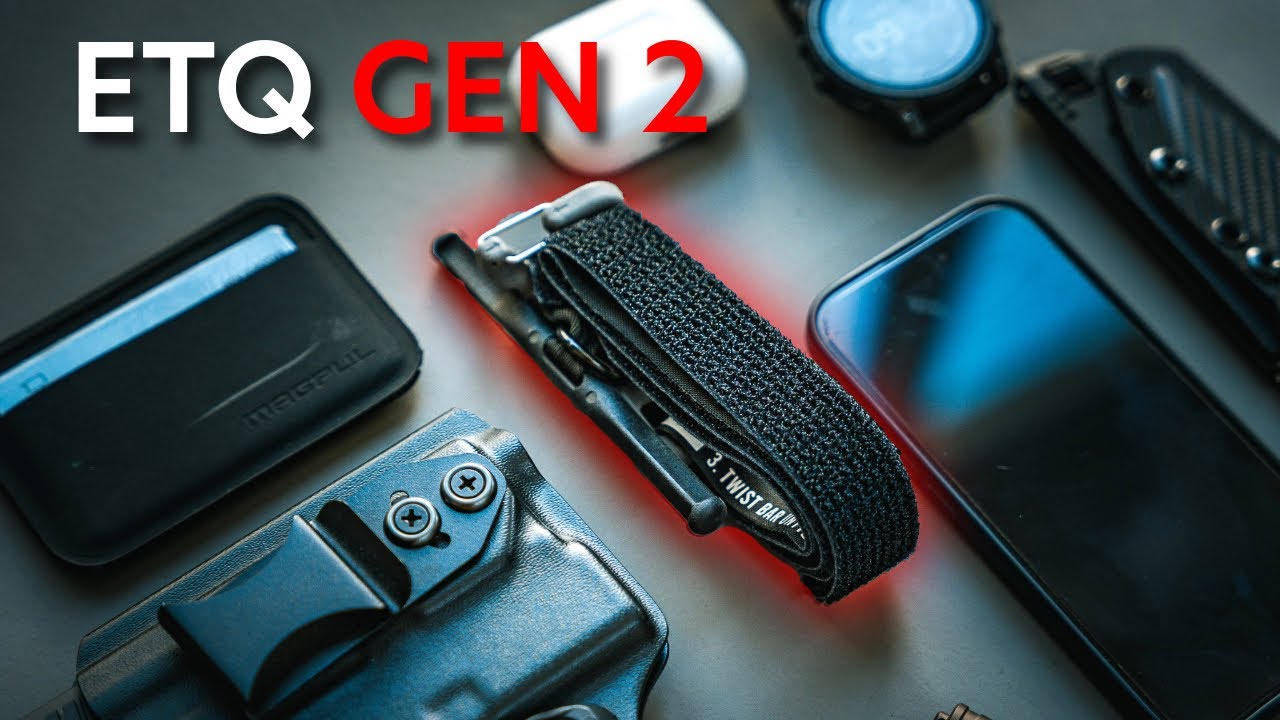
Next time I’ll be looking for a TQ replacement I will go for ETQ.
Looks solid and more convenient.
Next step is to check how it really works… 
1 Like
I’d hope to never actually need to see how it works….
Just saying.
4 Likes
Yeah… What I meant was to test them on yourself:
- can you apply it to yourself in less then 30 seconds
- can you apply it to each of your limbs one handed
- does ETQ holds applied pressure for at least 2 - 3 minutes
I’ve tested few of “Amazon type of” TQs and all of them failed test #3.
2 Likes
I get what you’re saying,
Apply until you feel the negative pressure, then release….
Not sure I’d hold a test for 2-3 minutes though,….. maybe a few seconds?
1 Like
To follow up on that, if you’ve tested various tourniquets on yourself,…
How did they fail after any length of time?
Please describe.
1 Like
Yes, got the orange ones cheaper and I like bright colors in case of stressful situation. Doesn’t blend in with the black bag and stuff.
1 Like
From handling the CAT and ETQ Side by side, I still prefer the CAT. BUT, ETQ is small and I have it on my person as I am typing this now. I’ve carried CAT in cargo shorts, but I’ve simplified my edc a lot to be more comfortable. I know many people will say it’s not about being comfortable… but I disagree. Everyone’s tolerance and norm is different.
2 Likes
I did lightly put it on. Didn’t want to tighten it anymore. It is harder to turn than the cat. I did notice you really want to make sure you pull it tight before pulling the windless, which is typical of all tourniquets…. But the Velcro can get kind of caught in the plastic housing. Nothing egregious but if it’s not pulled really tight I could see the windless not be tightening as far as it should. Just little nuances with the equipment. just make sure it’s as tight as possible before turning the windless and I don’t see any issues.
The bigger question or concern is will it be effective on large thighs. I watched the gen 1 prep medic videos and came to the conclusion it would probably be best not to put this one over thick clothing. I still think it will be more than likely work for most people and is better to have than nothing at all.
1 Like
In 48 years of life I’ve only seen one bleed that I felt required a tourniquet….
And it was myself who was bleeding, and we didn’t have a tourniquet available…..
Yes, having something like this is ideal, but not as necessary as the simple knowledge of what a tourniquet is and how and where to apply the pressure.
The makeshift tourniquet I helped my supervisor apply may well have saved my life? At least according to the triage doctor at the hospital anyway…
(Vertical scar was the original injury, horizontal was surgical to retrieve severed tendons)

I’ll keep carrying a sharp folding knife to cut any nearby fabrics and possibly even use it as a tool to twist the wrapping tight if needed.
3 Likes
Agreed, if you’re not comfortable you’re not going to carry it.
Thats why I carry RATs.
I’m going to invest in some ETQ. Thanks for the tip. 
4 Likes
Apply on self and then test for a pulse. Thats how I was taught.
I’ll be taking stop the bleed again in a couple weeks.
3 Likes
I only learned the basic pressure points and the use of a “windless” I guess it’s called to tighten the wrapping and cut off the blood flow.
It was in some random martial art class I took, and just stuck with me….
Same with basic emergency splints for broken bones that are just wood or pipe (anything rigid) and a shirt to wrap it tight just to get to a hospital.
Are either of those as effective as proper medical care? Not a chance!
Am I a professional EMT? Nope!
But if I’m first on scene, I will do what I can with what I have.
3 Likes
Usually the velcro is the problem.
Since the most of TQ rely on velcro this is the most important part of device.
I like “ratcheting” (RMT) or “buckle” (SAM XT) TQs.. but these are pretty expensive.
So depending on how good the velcro is - the time of keeping the pressure varies..
Once you tight TQ enough, so there is no space between TQ and body tissue - this must stay intact for some time. I’ve observed that if it stays for 2 - 3 minutes, it will stay for next hour or so.
Sometimes velcro used on cheap TQ cannot even stay stuck after 2 twists of the windlass.  These TQs are completely useless
3 Likes
When I have taken stop the bleed they do two things that seem to conflict. They tout the statistics of how many lives were saved by tourniquets during the Boston marathon bombing. Then they say use only TCCC approved tourniquets (SOFT-T wife and CAT). But something tells me the Boston bombing used a lot of improvised tourniquets. No one was carrying TCCC stuff back then.
I’ll take knowledge of principles over specific tools.
2 Likes
Good for you. They are so small, light weight, and even come in affordable versions, making it easier for us to EDC/carry nor matter our activity, bicycle, car, walking, hunting etc.
1 Like
Prep medic has a stop the bleeding video. He claimed all of the improvised tourniquets were ineffective for the Boston bombing. I don’t know the details of that stat though.
2 Likes
There’s a lot of Velcro on this ETQ. So even though it’s thin, there’s a lot of Velcro contact.
3 Likes