First Circuit takes aim in showdown over migrants’ Second Amendment rights
When the Trump administration’s anti-immigrant stance conflicted with its pro-gun stance, it chose the former — though judges didn’t indicate if the argument carried the day.
BOSTON (CN) — In a mashup of left- and right-wing hot-button priorities, the First Circuit heard oral arguments on Wednesday over whether the Second Amendment protects the right of people in the country illegally to own guns.
A three-judge panel didn’t tip its hand, although it seemed somewhat skeptical of the Trump administration’s position that the government can completely disarm people without legal status.
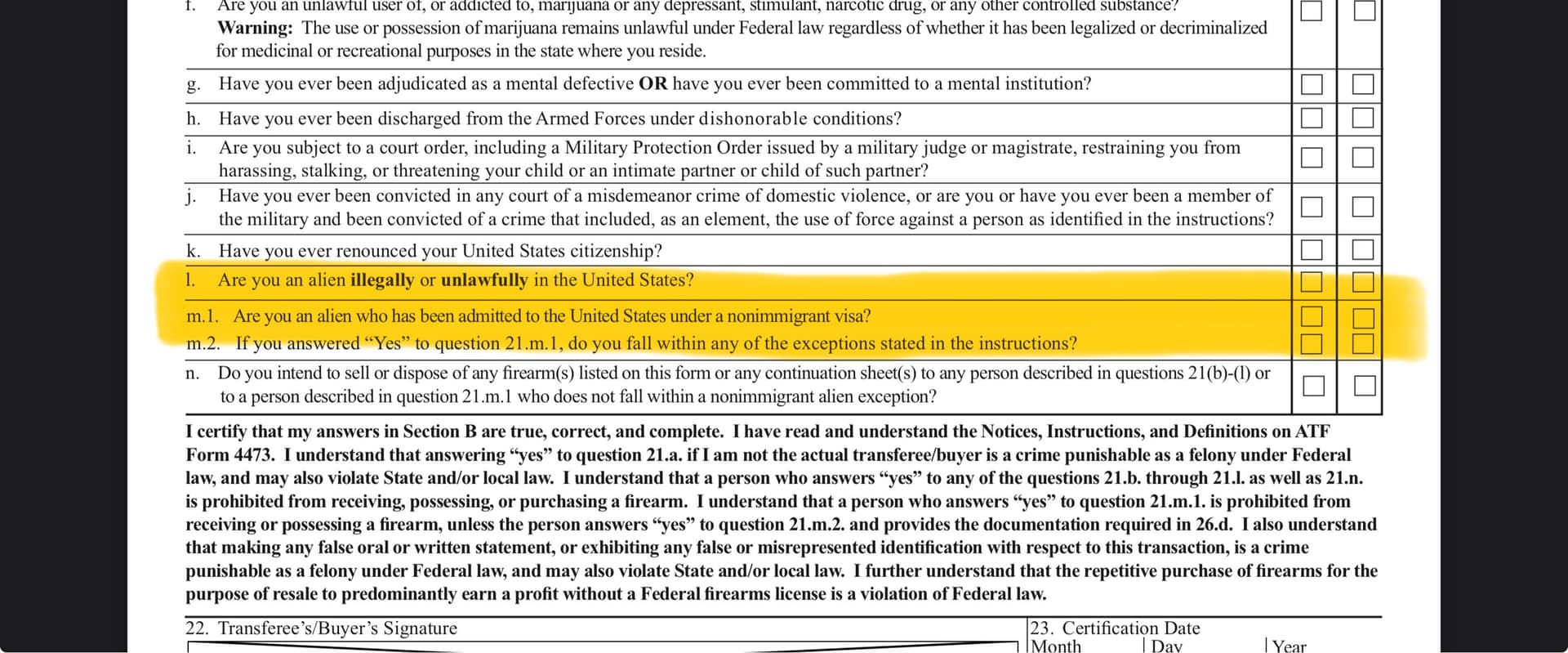
Alberto Rebollar Osorio was a Mexican citizen who had been living in the U.S. illegally for 11 years when he was taken into custody during a Maine traffic stop. Because he had a gun in his car, he was charged with violating a federal gun-control law — passed in 1968 during a wave of assassinations and riots — that prohibited immigrants like him from possessing a firearm.
A federal judge declared that the law violated the Second Amendment, holding that the amendment covered migrants and that the law was inconsistent with the country’s historical tradition of firearms regulation. But the Justice Department appealed, putting the Trump administration in the unusual position of advocating for limits on gun rights.
The government claims in its briefs that the amendment only protects law-abiding citizens, not migrants, but the panel immediately told its lawyer, Brian Kleinbord, not to waste his time arguing this point. The judges wanted to focus instead on whether the 1968 law was consistent with colonial-era traditions of gun regulation, which the Supreme Court has said is necessary to pass Second Amendment muster.
Osorio’s lawyer, Jamesa Drake of Auburn, Maine, told the court that there’s no such tradition because the concept of “illegal immigration” didn’t even exist in the U.S. until 1875.
But “that works against you,” replied U.S. Circuit Judge William Kayatta, because it means that the Founders simply didn’t consider the issue and therefore the court has to look for the closest colonial-era analogy.
Kleinbord suggested that 18th-century British law denied guns to people who weren’t subjects of the king, which he said was analogous to being a U.S. citizen, and he pointed to a number of early U.S. statutes that categorically denied gun ownership to groups of people who were suspected of being disloyal, including Blacks, Native Americans and Catholics, as well as British loyalists who refused to swear an oath of allegiance to the new country.
Drake said these were poor analogies because “the purpose of this law was public safety,” and the laws disarming Blacks and other groups were designed to subjugate them politically. She said loyalty oaths were a poor analogy because they applied to people who had revolted against the government.
“This defendant has never taken up arms against the country. He has demonstrated allegiance by helping his neighbors,” Drake said.
U.S. Circuit Chief Judge David Barron said, “I can see reasons why unlawful status could give rise to concerns about gun ownership,” but he was “struggling” with the idea that it’s because of a lack of loyalty. “I’m not quite grasping that point,” he said.
Barron pressed the issue by asking Kleinbord if the government could ban all noncitizens from owning guns, even ones who are here legally, since they also owe a primary allegiance to a foreign country.
Kleinbord was notably uncomfortable fielding the question and finally said that “our position might not be as strong” with legal U.S. residents.
“Is a person who is here unlawfully categorically less loyal than someone who is here legally but has no intention of becoming a citizen?” Barron asked.
Kleinbord shifted slightly and said the key issue is that immigrants here illegally, as was true of slaves, are not considered “part of the political community.”
Barron did suggest that there was a policy argument in favor of the law. “If I jaywalked this morning, that’s not a big concern. My having a weapon doesn’t seem like something people should be alarmed by.” But being caught without proper documents “has dramatic consequences, so there’s an incentive not to be found, which might lead one to be concerned about their having a weapon.”
But Drake replied that that’s true of many other situations, and “there are lots of reasons why ordinary Americans might not want an encounter with law enforcement.”
She also said that Osorio entered the country as a child and that while he remained unlawfully, that was a mere civil violation.
“If violating any law is enough, then the Second Amendment wouldn’t apply to a huge number of Americans,” she said.
Kayatta asked, “Couldn’t you assume that such a person has a great incentive to comply with the laws so as not to get caught?”
Barron and Kayatta were appointed by Barack Obama. U.S. Circuit Judge Jeffrey Howard, a George W. Bush appointee, rounded out the panel.
_____