I may be wrong on this, but it was my understanding that handgun SD ammo is usually JHP because you need all the tissue damage you can squeeze out of what amounts to a relatively slow bullet, if you want a quick defensive stop of the bad guy. Rifle ammo, on the other hand, has such high velocity and energy that expansion isn’t necessary, and with typically smaller bullets, JHP can fragment easily and potentially do less damage than regular FMJ. The velocity and tumbling of the bullet impart so much shock energy into the tissue that you get quick incapacitation of the BG without needing expansion. For this reason, I keep a few mags full of regular old M193, and also a couple of M855 if I need to poke through some kind of armor first, depending on what kind of poop has hit what kind of fan. M193 is both plinking and HD ammo for me.
Although I use 124 grain hollow points, I tried out the 147 grain at the same time. The 147 grain seemed easier on the recoil but also seemed slow. The lower grain bullets seemed to have more recoil but my problem was the feeling that the speed was off. I decided on the 124 grain and never looked into it. Now that you have brought it up, I looked it up. It looks like 147 may be your best choice for lighter recoil. Below is from an article that I read.
Historically, the 147gr 9mm round was developed for US Navy SEALS to use in suppressed 9mm submachine guns. The FBI carries 147gr 9mm today as a standard issue because they can fit more rounds in the magazine compared to using a .40 or .45 caliber. The lower recoil of the 9mm allows skilled shooters to be even more accurate and quick with shot placement.
Now, in comparison to 115gr and 124gr, this heavy beast isn’t necessarily better for some tasks. 147gr is particularly slow. When examined in JHP (jacketed hollow point) ballistics from handguns, terminal performance is noticeably different from the lighter rounds. Because these rounds are often subsonic, this means bullet expansion on impact is often lacking, even with hollow point designs.
For some, this doesn’t matter, and the 147gr bullet can be incredibly accurate aside from being slow. The slower speed of the bullet may lend itself to a more subtle recoil, but physics is still physics, and the change will once again be unnoticeable to most.
 This answer gets my vote!
Thanks Gary.
I find the lighter rounds noticeably more “snappy” out of my polymer guns. I will continue with the Federal Law Enforcement 147 as I am more accurate and back on target quicker.
I’ve started carrying these.
Haven’t bought a round from them yet that I didn’t like.
What does “major power factor” mean? They don’t seem to have any data on the link.
It’s a USPSA term.
Power factor = bullet weight in grains x muzzle velocity / 1000.
Minor power factor is 125 - 164, major starts at 165.
So to be major power factor a 124 grain bullet needs to have a muzzle velocity of at least 1,330.65 fps.
Theirs says it has a velocity of 1390 fps, so the power factor of this ammunition is 172.36.
I don’t know what kind of powder they use or any other load data.
That’s a higher muzzle velocity than +P loads. Wondering if it is safe for use in all barrels.
It specifically says it is not intended for use with all firearms. Fortunately, what I have to shoot it out of is +P rated, so I SHOULD be good.
This may seem weird/stoopid but…
I draw a Rectangle from the bottom of the Targets nose
to the Throat/Sternum (Box is narrow and short)
‘Aim small, Miss small’
This way I’m getting use to avoiding any Ballistic face shield and
get above the chest plate of the Body Armor/Plate carrier.
I never saw this anywhere, didn’t read about it or was taught it.
I just figure it’s like having one of those Range target’s (4 to a sheet)
Kind of small but now in the silhouette of a Human. It works for me.
I can now ‘snap shoot’ it and hit that box easily
(when I am Open Mesa–My Indoor Range doesn’t ‘ALLOW’ much movement,
drawing from the Holster, snap shooting with an AR.
I don’t care what ammo I use as long as it’s the GOOD STUFF.
My guns eat all the ammo I feed them. Haven’t run into actual Jamming.
I have to practice my guns jamming fortunately.
AMEN Brother, AMEN
Speaking from the viewpoint of someone who does not have any weapon chambered in .223 or 5.56 (OK - I know I’m the odd guy out) I can’t add any insight to the discussion.
I can, however, offer some insight to the “self defense” vs “practice round” sub-topic. In our two personal side arms, both 9mm, the magazines currently in those weapons are full of Hornady Critical defense 124g hollow points. All of our spare magazines are full of124g FMJ. All the spare ammo we have is 124g FMJ. We don’t have any frangible ammo, no light loads or anything else we would not use in a self-defense situation. I suppose for argument’s sake, we could say the two mags of hollow points are for self-defense and the FMJ are for practice. The FMJ are also for extended moments of gun play where more than 12 or 17 rounds (depending on weapon) are required.
FMJ is prone to through and through, especially with our 9mm’s. A hit center mass with my chosen FMJ rounds will hit the sternum and Cadillac right on through the body. Through the sternum, through the chest cavity, through the veins and arteries, through the spine and spinal cord. Offset that impact one direction or the other and it goes through lungs and/or the heart. Half a dozen rounds through the chest and you bad guy is a goner. Dependent upon what sort of drugs your would-be attacker has been doing, he could have a few more minutes of fight left, so continue shooting until the threat stops.
Be ready to answer the hard questions when faced with the legal fallout: Why did you shoot him so many times? Because he was still trying to kill me.
There is the possibility that FMJ rifle rounds became SD rounds as a result of the Geneva Convention where the signatories agreed to use FMJ bullets in order to make warfare more “Humane” by, theoretically, drilling nice, neat holes in the troops for easier patchup jobs in the field as opposed to the big, nasty ugly wounds caused by “dum-dum” bullets and other significant developments in projectile advancement.
Exactly. Went to the range with a coupe guy a while back, they talked about all of the $$$ they had into gun and accessories. They handed me a .338 Lapua, and they start plinking away. I set up on a 200 yard 6in plate while they were dicking around and rung it, twice with two shots. They were like, who did that? My answer “If I can’t hit a 6 in target at 200 yds leaning on a bench with a $3,000.00 gun with $2,000.00 optics I’d be embarrassed”.
Hmmm. Works for me. 
I can ring a 6” gong at 200 yards all day long with my Tavor,…
Missing it with a proper target rifle would be embarrassing as hell!
Now shrink that to a 3” gong, and triple the distance to 600 yards and I could forgive a miss 
Never had that much money in my hands at one time. If I had though…this bumpkin could probably figure it out. 
When my range neighbor told me to take a seat behind his 6.5Creedmore competition rifle to kill my ballistic dummy head at 600 yards I was blown away!
I missed the first shot because of an unpredictable crosswind, he was watching the “splash” through his spotting scope and said the wind caught it around 300 yards out and it took a hard left.
Second shot was dead center.

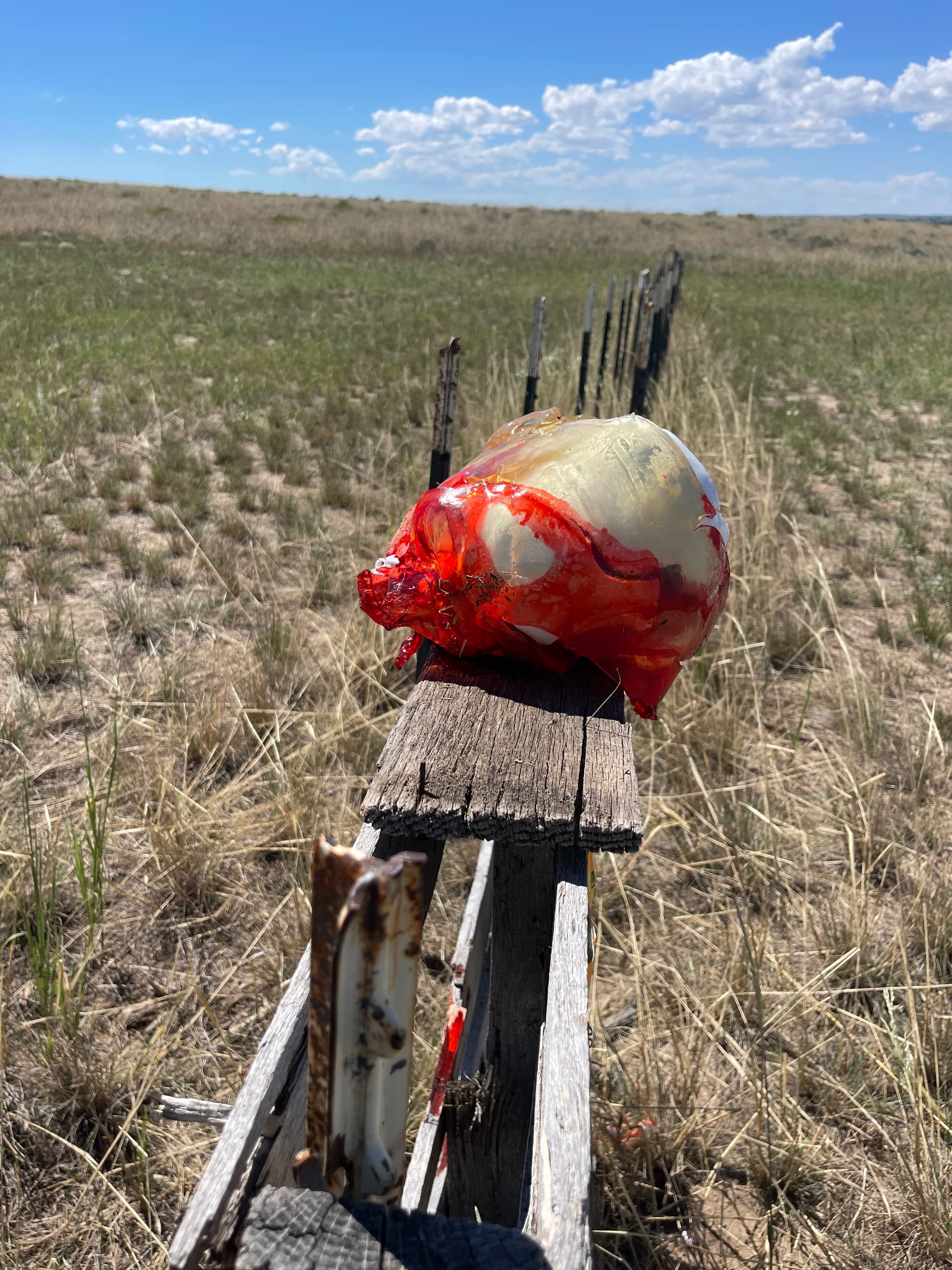
Looks like a great past time!