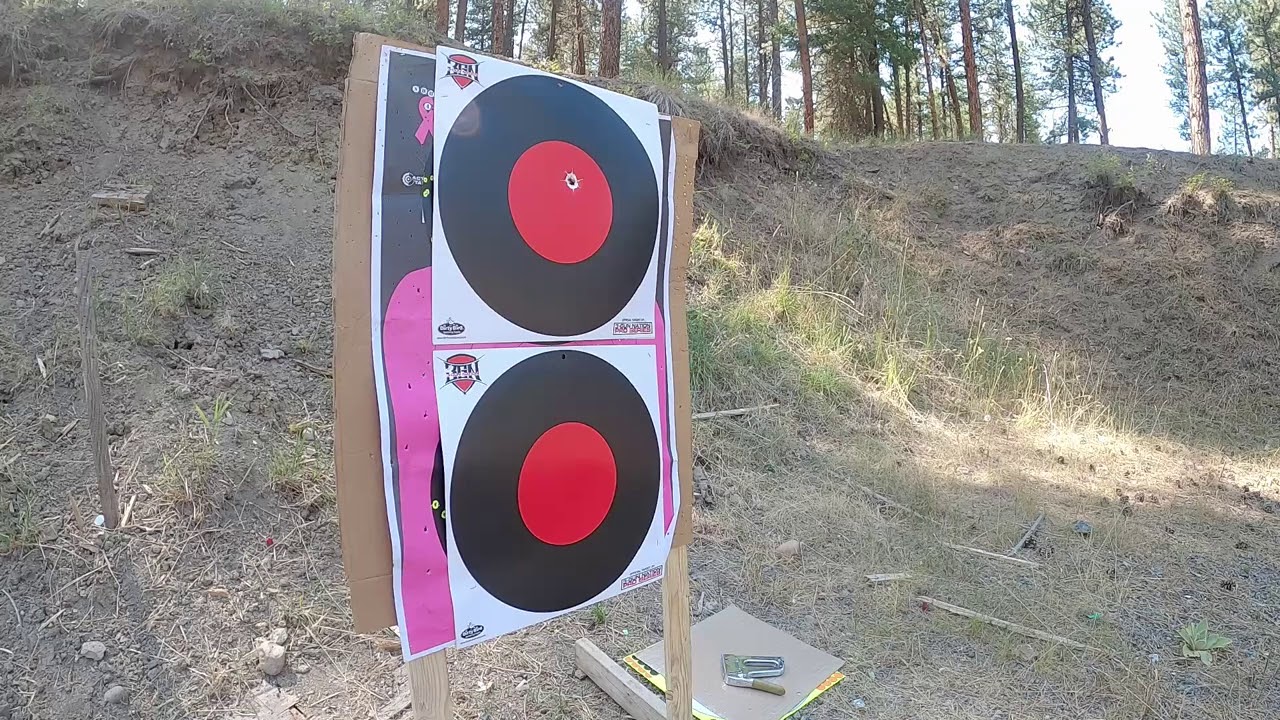
I look for home intruders with my shotgun
1 Like
Ive got a mossberg 590 tactical and dam what a gun. Accurate and powerful. Dont aim just point . Nice controllable recoil. I use double ot buck. I wouldn’t want to get hit by it.
6 Likes
Hello and welcome @Ashley26
2 Likes
Whoah. Wow.
I’ve wondered, how many pellets are in a shell of buck, how many pellets are in a shell of bird shot shell?
Does it depend on the cal size?
1 Like
I have 250 Sellier & Beloit 12 ga. 00 buck shells that contain 12 .32 caliber pills to cure what ails any uninvited BGs that enter my humble abode.
Most shells have nine pills.
3 Likes
@Burdo This aught to keep ya busy for a while. 
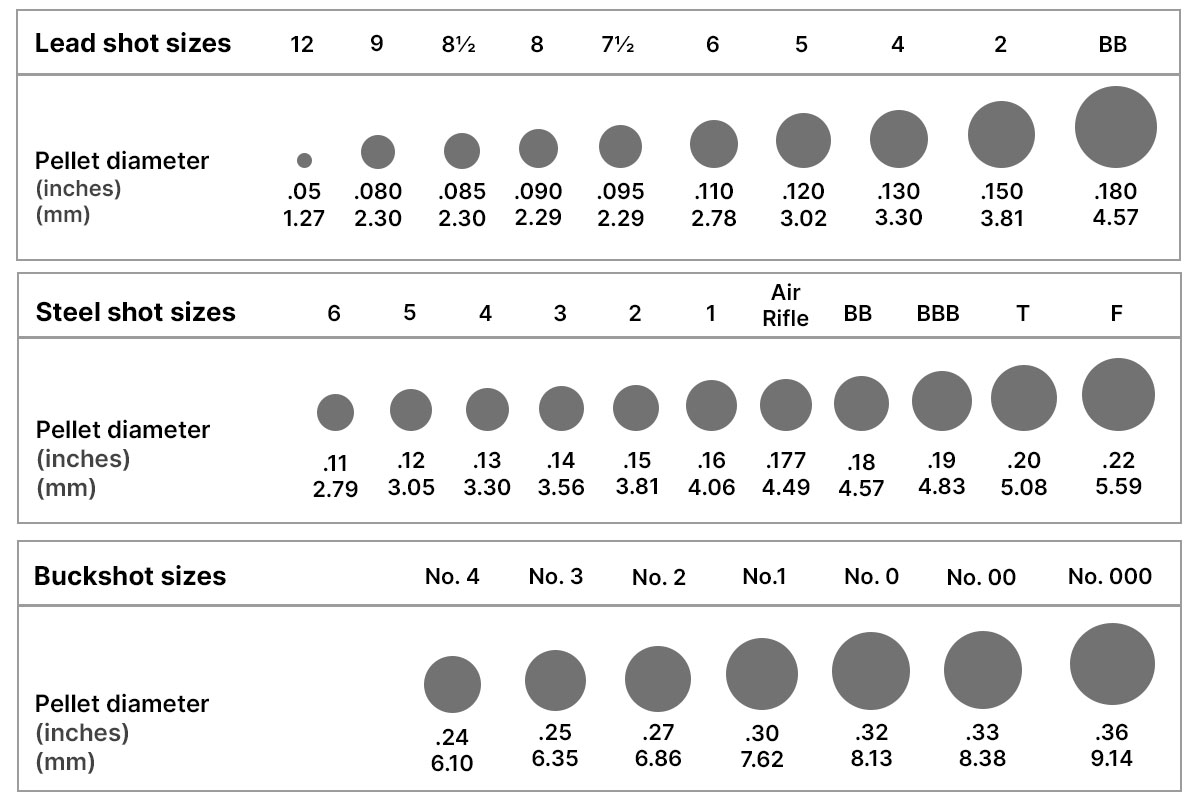
Shot Size Chart
Recommended Shot Sizes for Waterfowl and Game Hunting
Shotgun shot is manufactured in a variety of sizes for different applications. The size of shot decreases as the number of the shot increases. A No.8 shot is going to be smaller than a No.2 shot. Certain shot sizes are traditionally used for hunting different types of game—although, shot selection for hunting is influenced by subjective preference. The shot size chart below serves as a general guide and starting point for shot selection for hunting various game animals. (Note: The size of shot presented below, whether lead or steel, is based on the American Standard shot sizes.)
| Game Species | Shell, Gauge And Shot |
|---|---|
| WATERFOWL | |
| Small Ducks | Shell: 2-3/4 inch, 3 inch |
| Gauge: 20 ga | |
| Shot: 3,4,5,6 |

Shell: 2-3/4 inch, 3 inch
Gauge: 12 ga
Shot: 3,4,5,6|
|Large Ducks

Gauge: 20 ga
Shot: 3,2,1
Shell: 2-3/4 inch, 3 inch, 3-1/2 inch
Gauge: 12 ga
Shot: 3,2,1|
Gauge: 20 ga
Shot: 2,1,BB,BBB,T
Shell: 3 inch, 3-1/2 inch
Gauge: 12 ga
Shot: 2,1,BB,BBB,T|
Gauge: 20 ga
Shot: 4,5,6
Shell: 2-3/4 inch
Gauge: 12 ga
Shot: 4,5,6|
|Quail

Gauge: .410 ga
Shot: 6,7,7.5,8,9
Shell: 2-3/4 inch
Gauge: 20 ga
Shot: 6,7,7.5,8
Shell: 2-3/4 inch
Gauge: 12 ga
Shot: 6,7,7.5,8|
|Grouse

Gauge: 20 gauge
Shot: 4,5,6,7,7.5
Shell: 2-3/4 inch
Gauge: 12 gauge
Shot: 4,5,6,7,7.5|
|Doves
Gauge: .410 ga
Shot: 6,7,7.5,8,9
Shell: 2-3/4 inch
Gauge: 20 ga
Shot: 6,7,7.5,8
Shell: 2-3/4 inch
Gauge: 12 ga
Shot: 6,7,7.5,8|
|Turkeys
Gauge: 20 ga
Shot: 4,5,6
Shell: 3 inch, 3-1/2 inch
Gauge: 12 ga
Shot: 4,5,6|
|Woodcock

Gauge: .410 ga
Shot: 6,7,7.5,8,9
Shell: 2-3/4 inch
Gauge: 20 ga
Shot: 6,7,7.5,8
Shell: 2-3/4 inch
Gauge: 12 ga
Shot: 6,7,7.5,8|
|SMALL GAME|
|Squirrel
Gauge: 20 ga
Shot: 4,5,6
Shell: 2-1/2 inch, 2-3/4 inch, 3 inch
Gauge: 12 ga
Shot: 4,5,6|
|Rabbit

Gauge: 20 ga
Shot: 5,6,7,7.5
Shell: 2-3/4 inch, 3 inch
Gauge: 12 ga
Shot: 5,6,7,7.5|
|Coyote

Gauge: 20 ga
Shot: 3,4,5
Shell: 2-3/4 inch, 3 inch, 3-1/2 inch
Gauge: 12 ga
Shot: 3,4,5|
|LARGE GAME|
|Deer

Gauge: 20 ga
Shot: OO Buck (or slug)
Shell: 3 inch, 3-1/2 inch
Gauge: 12 ga
Shot: OO Buck (or slug)|
|Elk

Gauge: 12 ga
Shot: Saboted slug|
|Black Bear |Shell: 3 inch, 3-1/2 inch

Gauge: 12 ga
Shot: 00 buck, 000 buck, slug (self-defense only)|
|Grizzly Bear |Shell: 3 inch, 3-1/2 inch

Gauge: 12 ga
Shot: 000 buck, slug (self-defense only)|
Shot Size Charts for Hunting
When selecting shot size for hunting, range from game and penetration should also be considered to ensure a humane kill. Size and type of shot may also be specified by local hunting regulations. When selecting shot for hunting, it’s important to remember that relative to a bullet shot loses velocity fairly quicky. Additionally, larger shot typically carries farther and spreads much less than small shot.
Lead Shot Sizes
For upland birds and small game, lead is regarded as the ideal material for shot. Lead shot is dense, allowing it to retain energy and flatten on impact. For hunting smaller birds, such as doves, pigeons, quail, woodcock, rail and snipe #8 and #7-1/2 lead shot is ideal. For upland game birds, including grouse and partridge, and short-range uplands birds (woodcock and ruffed grouse), #7-1/3 lead shot is recommended. For game, such as squirrel, prairie dog, rabbit, pheasant (short range) and grouse (long range) a #7-1/2 or #6 is the go-to shot size. Hunting pheasant or chuckar long range usually requires a #6 or #4 lead shot.

Steel Shot Sizes
In a side-by-side comparison, steel shot does not perform as well as lead shot. Steet shot is lighter and harder than lead. However, when hunting migratory waterfowl non-toxic shot, such as steel shot, Tungsten or Bismuth, is mandated by federal law. Steel shot is the most popular non-toxic shot for hunting waterfowl. For hunting ducks short range, #4, #3, or #2 non-toxic shot is recommended. For hunting long-range ducks, the larger #2, #1 or BB shot sizes are most common. For hunting larger waterfowel, specifically geese, BB or BBB shot is recommended at short range, and BBB or T size shot performs best at long range.

Buckshot Sizes
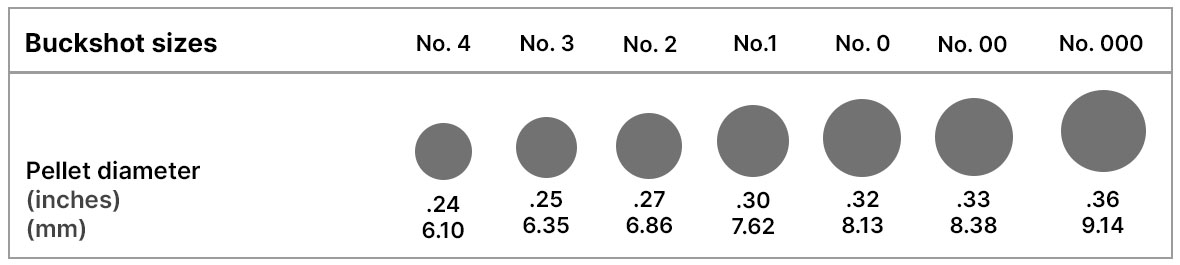
Buckshot is manufactured to larger diameters than either lead or steel shot. It can be used for hunting larger game such as deer, elk or moose. While still commonly used for hunting deer, single-projectile loads known as “slugs” are far more common now for hunting deer and larger prey animals using shotguns. The 12 guage “oo” (“double-aught”) buckshot made up of approximately 9 .33 caliber pellets is still used for hunting medium-sized game species such as whitetail or mule deer at close range. 00 buckshot can also be used for killing larger game including elk or moose, but is only effective at close range. Hunting bear, including black, brown and grizzly bear is not recommended using buckshot. However, the large “ooo” (“triple-aught”) buckshot can be used for self defense against bears.
Shot Size, Type and Length by Gauge
Find shot size, type and length by gauge including 10, 12, 16, 20, 28 and 410 shotgun gauges.
| Gauge | Length, Shot Size And Types |
|---|---|
| 10 Gauge | Length: 3-1/2" |
| Shot size: #2, #4, #5, BB, BBB, #00 Buck, T | |
| Type: Slug, Buckshot, Waterfowl, Turkey | |
| 12 Gauge | Length: 1-3/4", 2-3/4", 3", 3-1/2" |
| Shot size: #1, #2, #3, #4, #5, #6, #7, #7.5, #8, #9, BB, BBB, #00 Buck, #000 Buck, T | |
| Type: Slug, Buckshot, Waterfowl, Upland, Turkey | |
| 16 Gauge | Length: 2-3/4" |
| Shot size: #2, #4, #5, #6, #7.5, #8, BB | |
| Type: Slug, Buckshot, Waterfowl, Upland | |
| 20 Gauge | Length: 2-3/4", 3" |
| Shot size: #1, #2, #3, #4, #5, #6, #7, #7.5, #8, #9, BB, #1 Buck, #2 Buck, #3 Buck | |
| Type: Slug, Buckshot, Waterfowl, Upland, Turkey | |
| 28 Gauge | Length: 2-3/4", 3" |
| Shot size: #5, #6, #7.5, #8, #9 | |
| Type: Waterfowl, Upland | |
| 410 Gauge | Length: 2-1/2", 3" |
| Shot size: #4, #6, #7.5, #8, #9, #000 Buck | |
| Type: Slug, Buckshot, Upland, Turkey |
4 Likes
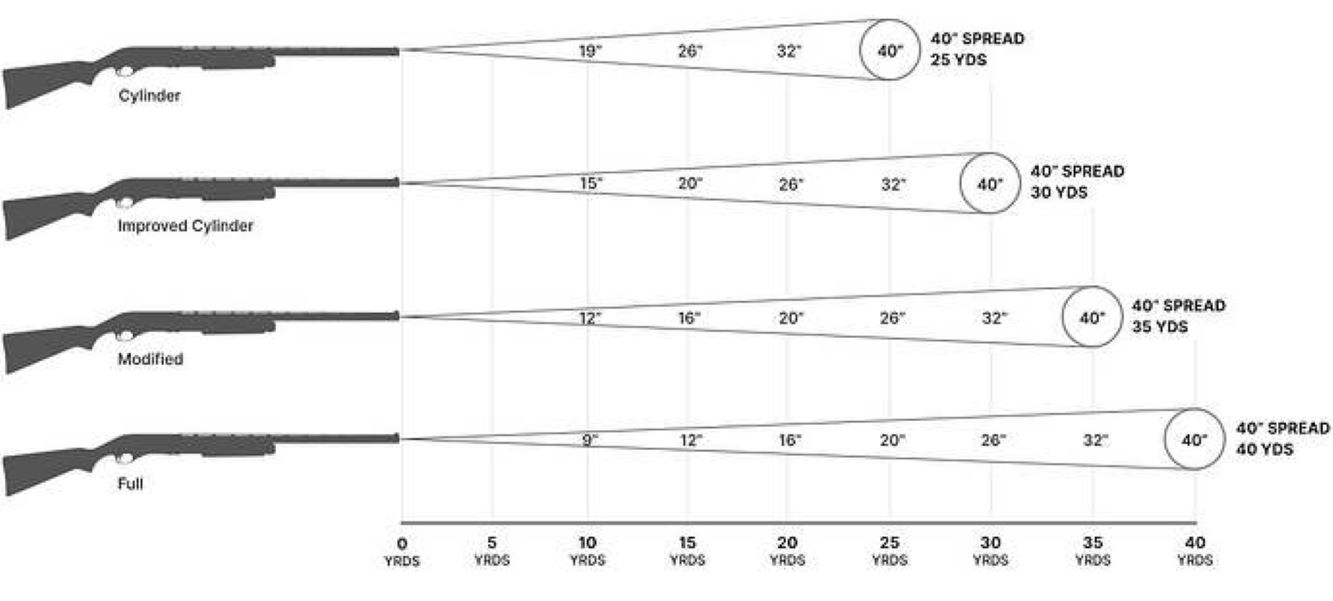
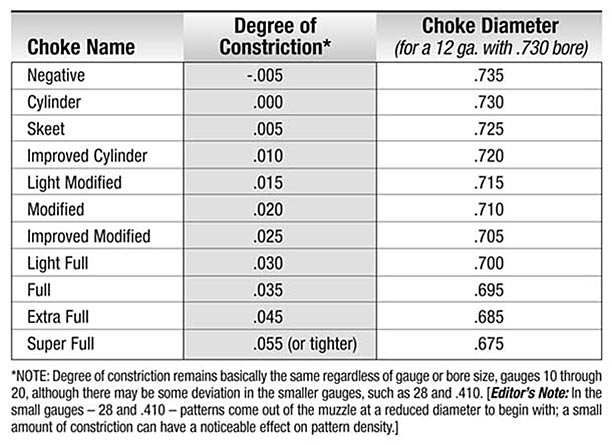
Click on it 2Xs to enlarge it.

@RangeMatt posted on another topic. All info in one place.
Click 1 time to enlarge.
//////////////////////////////////////////////////////////////////////////////////
And then we have the SLUG…
**** Modern high-speed cameras have proven the rifling groves on the Foster slug do impart a stabilizing right-hand spin on the slug in a smooth bore barrel. ****
Ammunition: Shotgun Slugs 101
July 23, 2018
Modern-day shotgun slugs have had their own evolution and history, and as you may suspect, they’re not all created equal.
What styles of shotgun slugs are available today:
In general, there are two main types of shotgun slugs: Full-bore slugs, in essence, fill up most of the bore of the shotgun as they travel down the barrel, and sabot slugs that employ a plastic sabot to engage the rifling and then drop off after it leaves the barrel, much like a wad deviates from a load of birdshot in flight.
Foster Slugs

Federal’s TruBall slug is of the Foster design, meaning it has a hollow rear portion. Modern technology, however, has allowed for tweaks and design changes that have led to ever increasing accuracy.
This is the original slug created to be fired in a smoothbore shotgun. Karl M. Foster started making them for neighbors in the early ‘30s as people were looking for something to knock down a deer to feed families during the Great Depression. Foster originally hand-cast these slugs and filed grooves on the side for rifling, which is much the same as Foster-type slugs appear today.
The Foster slug’s greatest characteristic is a hollow rear portion, which puts most of the weight near the tip of the slug. If the slug starts to yaw in flight, which they almost always do, the weight forward aspect is thought to bring the slug back into a straighter, more stable flight … much the same as a badminton shuttlecock or air rifle pellet works.
Foster slugs are also known as “American” slugs to distinguish them from European-type slugs such as the Brenneke. Rifling on the Foster slug gives it no gyroscopic spin advantage as barrel rifling does with a rifle bullet, but the grooves on the side of these shotgun slugs do allow for easier transition as they’re swaged down to pass through various chokes.
Foster slugs are capable of being fired through most shotgun chokes, rifled choke tubes and rifled shotgun barrels — though shooting a Foster through a rifled barrel will do little more than dramatically foul the rifling. Stay away from super-tight turkey chokes with any slug; at the very least, “pinching” will occur and group sizes will be measured in feet, not inches.
For reasons not clear to anyone, including me, gun writers in the era when Foster was around confused his name with the Forster Brothers who made reloading tools during this same period. So, sometimes you may see “Forster” when referring to the Foster-style slug.
Brenneke Slugs

The Winchester Deer Season slugs also took a page from the Foster playbook, though they feature a polymer “tail” that acts much like fl etching on an arrow.
The German Wilhelm Brenneke gave us the Brenneke slug in 1898. The chief variance from the Foster slug is that the Brenneke is solid and has a wad attached to the rear of the slug that remains on the slug after firing. The wad may be plastic, cellulose fiber or felt, and it gives the slug stabilization in flight.
Like the Foster, the grooves on the side of the Brenneke give it no spin stability but do help with moving into a choke with less deformation. The Brenneke slug is solid and gives more penetration with less deformity and is often chosen for dangerous animal applications, as well as some military and law enforcement needs.
Sabot Slugs

For the slug shooter looking to maximize range, there is no better combination of a sabot-style slug and a fully rifl ed slug barrel. Add a polymer tip to the equation, and accuracy — as well as terminal performance — get pretty impressive.
The shotgun slug that so many of us have trouble pronouncing (sab-oh, the “a” is short and the “t” is silent), a plastic sabot encases the slug and engages the barrel’s rifling, giving the slug much of the spin advantage of a rifle bullet. To be most effective, the sabot needs to drop from the slug as soon as possible after leaving the barrel, much like a birdshot wad.
Shotgun slugs came out of the dark ages with the advent of the sabot slug and rifled shotgun barrels. What we have now with sabots is, in effect, rifle bullets the size of shotgun slugs (.72 caliber for 12 gauge and .61 for 20 gauge). This is a huge piece of lead or copper cast downrange at the target. Ballistic-tip slugs slip through the air with a much greater ballistic coefficient than the punkin’ ball slugs of old, which means they fly farther with greater retained velocity. Many slug shooters will tell you that, with the right gun and slug combination, 200-yard shots are not out of the question.
Editor’s Notes: This article originally appeared in the June 2018 issue of Gun Digest the Magazine.
//////////////////////////////////////////////////////////////////////////////////////////////////////////////
And the Shorty’s.
Understanding the Mini Shot Shell: A Comprehensive Guide
/ Ammunition Advice / By Jamie / June 28, 2023
When it comes to shotgun ammunition, the mini shotshell has been gaining attention in recent years. These shorter shells offer a unique blend of benefits and drawbacks that can make them an intriguing choice for certain applications.
In this comprehensive exploration, we’ll delve into the evolution of these mini shells, discussing their potential advantages, especially in home defense scenarios or when used with specific firearms like the Mossberg Shockwave. We will also address concerns about feeding reliability in different shotguns and propose solutions for more reliable use.
You’ll gain insights from our performance analysis of four distinct types of mini-shots, examining muzzle velocity measurements, patterning results, and ballistic gelatin testing outcomes. Moreover, we will compare terminal performances between standard-size loads and minis to highlight differences in penetration depths.
Finally, we’ll evaluate trade-offs associated with using minishell loads for self-defense purposes. This guide aims to provide you with a well-rounded understanding of the role mini shot shells can play within your shooting repertoire.
Understanding Mini Shotgun Shells
Mini shotgun shells have gone from being a novelty item to a serious consideration for firearm manufacturers. These compact rounds are smaller than standard 12 gauge shells but offer unique benefits.
Evolution of Mini Shotgun Shells
The rise of the mini shell began as a low-recoil alternative for clay pigeon shooters. Now, they’re used by hunters looking for lighter loads and homeowners seeking effective self-defense options with less recoil. The most common type is the 1¾-inch shell made popular by companies like Aguila Ammunition.
Potential Benefits of Using Mini-Shotgun Shells
- Reduced Recoil: Mini shells offer reduced recoil compared to traditional shotshells, making them easier to handle and allowing for quicker follow-up shots in high-stress situations.
- Increase Ammo Capacity: Due to their smaller size, more mini-shells can fit into a shotgun’s magazine tube compared to full-sized shells, increasing your overall ammo capacity without requiring any modifications or special equipment.
- Versatility: Despite their size, mini-shots come in various load types including birdshot for small game hunting or target practice; buckshot suitable for medium-size game or home defense; and slugs which provide maximum stopping power at close range.
All these potential benefits make it clear why many shooters are giving these diminutive rounds serious consideration despite some inherent trade-offs associated with using minishell loads over traditional ones – something we will delve deeper into later sections.
Feeding Reliability in Different Shotguns
As a shotgun enthusiast, you’ve probably heard about the feeding reliability issues that can occur when using mini shotgun shells. These smaller rounds may not cycle as reliably in certain types of shotguns, especially semi-automatics and some pump-action models. Why? Well, their reduced size doesn’t match up well with the standard shell lifter design found in most 12 gauge shotguns.
Issues with Feeding Reliability
The main problem is that these smaller shells have less surface area for the gun’s action to engage, causing potential malfunctions like stovepipes or double feeds. Shooters often report problems when trying to use mini-shells in popular models like Remington 870s or Mossberg 500s without any modifications. It’s akin to attempting to force a shape that doesn’t fit the space–it simply won’t work.
Solutions for Reliable Use
Thankfully, there are solutions available on the market designed specifically to improve feeding reliability with mini-shells. One such solution is OpSol’s Mini-Clip adapter – an inexpensive device that fits into your Mossberg’s loading port and effectively reduces its size so it can accommodate these smaller shells more reliably. It’s an effortless alteration that can make a substantial impact.
Mossberg themselves have also taken note of this trend towards minishell usage and released their own modified model – the Mossberg 590S. This new variant has been engineered right out of the box to feed both standard 2 3/4-inch and 1 3/4-inch mini-shell loads without requiring any additional adapters or modifications. For those who are looking for an easy solution to use mini-shells, the Mossberg 590S is a great option.
In conclusion, while feeding reliability might be a concern if you’re considering switching over to minis for increased capacity or reduced recoil benefits they offer, know that there are effective workarounds available today making them viable options even for high-stress situations like home defense where reliable functioning is paramount. Don’t let feeding issues hold you back from trying out these innovative shells.
Key Takeaway:
Mini shotgun shells may have feeding reliability issues in certain types of shotguns, but there are solutions available on the market to improve their performance. Shooters can use devices like OpSol’s Mini-Clip adapter or opt for modified models like Mossberg 590S that can feed both standard and mini-shell loads without requiring any additional modifications to the tubular magazine. Don’t let feeding issues hold you back from trying out these innovative shells.
Performance Analysis of Four Different Mini-Shots
Currently on the market there are four different types of minishell loads:
- Aguila Mini Buckshot (seven #4 pellets and four #1 pellets)
- Federal #4 Buck Shorty (15 pellets)
- Federal Shorty Slug (one-ounce rifled slug)
- Federal 00 Buck Force X2 (six split-shot pellets)
Muzzle Velocity Measurements
The muzzle velocity for each type vary significantly due to differences in shell design and payload weight. For instance, Aguila’s minishell buckshot load clock in at around 1,200 feet per second (fps), while Federal’s #4 buckshot register approximately 850 fps.
Patterning Results
All four types produce wider spread patterns compared to standard size shells when fired from similar distances – an important factor when considering their use for self-defense purposes.
Ballistic Gelatin Testing Results
With ballistic gelatin testing using FBI-standard blocks, results are mixed. Some loads, like the Federal one-ounce slug, show impressive penetration depth comparable to full-size counterparts (around 22″), whereas others, such as the Federal Force X2, exhibited borderline performance that could potentially limit their effectiveness in real-world scenarios.
While mini shotgun shells offer advantages like reduced recoil and increased capacity over traditional shells – factors that can be particularly beneficial for novice shooters or those with physical limitations – there are also trade-offs involved, mainly related to feeding reliability issues and inconsistent terminal performances depending on the specific load used.
Why do you use (or don’t use) shotgun mini shells? #BulkMunitions #ShotgunShells #HomeDefenseClick to Tweet
Comparing Terminal Performances between Standard Size & Minis
The terminal performance of a shotgun shell is crucial in determining its effectiveness for self-defense. This section will compare the penetration depths achieved by various pellet sizes used in both standard-size shells and mini-shells.
Differences in Penetration Depths Between Standard Size Shell Loads Vs Minis
Standard 12-gauge shotgun shells typically use larger pellets, which can provide deeper penetration compared to smaller pellets found in mini-shell loads. For instance, #00 buckshot from a standard shell can penetrate up to 14 inches into ballistic gelatin, while the same shot type from a mini-shell might only achieve around 9-10 inches of penetration.
This difference may seem insignificant at first glance but could be vital when considering effective stopping power against an assailant. Still, each event is dissimilar and elements like distance and target material also are relevant.
In contrast, mini-shells offer more rounds per tube due to their shorter length – potentially providing you with additional opportunities to stop a threat. But this advantage comes with some trade-offs like lesser recoil control and wider spread patterns which might affect your accuracy under stress conditions.
Federal Force X2, one of the four different types of mini-shell loads shows promising results when patterning but has very shallow penetration in gel due to being lighter than traditional buckshots. Its segmented slugs are designed specifically for improved energy transfer upon impact resulting in better terminal performance even though they’re smaller than conventional ones.
To sum it up: if deep penetration is your primary concern then standard-size shells would likely serve you better, especially at longer distances or through barriers; however if capacity holds higher priority for you then consider giving these mini-shotgun shells a try.
Key Takeaway: While larger pellets in standard shells provide deeper penetration, mini-shells offer more rounds per tube for additional opportunities to stop a threat. However, they come with trade-offs like lesser recoil control and wider spread patterns that might affect accuracy under stress conditions.
Evaluating Trade-offs Associated With Using Minishell Loads For Self-Defense Purposes
When selecting ammunition for self-defense, the consequences of making the wrong choice can be dire – thus necessitating careful consideration of all trade-offs. Mini shotgun shells are gaining popularity due to their lower recoil and increased capacity. But, like everything in life, they come with trade-offs that need careful consideration.
Reduced Recoil
The most significant advantage of minishells is their reduced recoil. This makes them an excellent option for those sensitive to the heavy kickback associated with standard 12-gauge loads. The lesser recoil allows for quicker follow-up shots, which could prove vital in a high-stress defensive situation.
Increased Capacity
Mini-shells offer greater ammo capacity compared to traditional shells. This means you can load more rounds into your firearm before needing to reload – another potential lifesaver during a home defense scenario.
Compromised Terminal Performance
However, these benefits come with some compromises. One such compromise lies in the terminal performance of mini-shells. They often exhibit borderline effectiveness when compared against full-sized loads. Federal’s Force X2 buckshot, for example, shows less penetration depth than its full-size counterpart despite having similar pellet count and velocity.
Wide Shot Spreads
Wide-spread patterns are another characteristic feature of short shells that might affect their suitability for self-defense purposes. While this trait ensures better hit probability at close-range encounters typical in home defense situations, it could potentially lead to over-penetration issues or even missed targets at longer distances due to a lack of control over shot dispersion.
Final Thoughts
So, how does one weigh these trade-offs? It ultimately boils down to personal preference and specific use-case scenarios. If you prioritize lower recoil and higher capacity while willing to accept slightly compromised terminal ballistics and wider shot spreads, then mini-shell loads might just be right up your alley. But, if deep penetration and tight control over shot patterns are non-negotiables for you, then sticking with traditional shell sizes would probably serve you better.
Key Takeaway:
Mini shotgun shells have lower recoil and increased capacity, making them a good option for those sensitive to heavy kickback. However, they compromise on terminal performance and wide shot spreads, which may not be suitable for everyone’s needs in self-defense situations. Ultimately, the decision depends on personal preference and specific use-case scenarios.
6 Likes
Fantastic information good sir.
2 Likes
5 Likes
I added more info above. Yer welcome. 
1 Like
Awesome, just awesome.
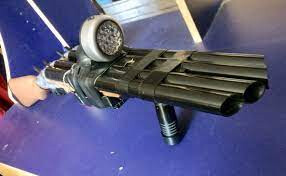
Looks like a 4 barrel exhaust.
Does anyone use the Mini Shells for Home Defense? They seem like they would be ideal as long as reliable feeding 
2 Likes
I have not tried them yet. The reliability issue is what holds me back. I only have my Remington 870, and I may buy some and try them out. I don’t hear good things though.
4 Likes
Two of my concerns addressed in the article above. Aquila seem to be the way to go.
The slugs seem to work well.
The slugs are cool, and from Federal, we get a 1-ounce rifled slug at 1,200 feet per second. The Aguila slugs are 7/8 ounces with a 1,300 FPS rating. Finally, Challenger mini shells give us a 3/4 ounce slug at 1,200 feet per second. The Challenger is a little light compared to the other two, but also lower recoiling.
Solutions for Reliable Use
Thankfully, there are solutions available on the market designed specifically to improve feeding reliability with mini-shells. One such solution is OpSol’s Mini-Clip adapter – an inexpensive device that fits into your Mossberg’s loading port and effectively reduces its size so it can accommodate these smaller shells more reliably. It’s an effortless alteration that can make a substantial impact.
Performance Analysis of Four Different Mini-Shots
Currently on the market there are four different types of minishell loads:
- Aguila Mini Buckshot (seven #4 pellets and four #1 pellets)
- Federal #4 Buck Shorty (15 pellets)
- Federal Shorty Slug (one-ounce rifled slug)
- Federal 00 Buck Force X2 (six split-shot pellets)
Muzzle Velocity Measurements
The muzzle velocity for each type vary significantly due to differences in shell design and payload weight. For instance, Aguila’s minishell buckshot load clock in at around 1,200 feet per second (fps), while Federal’s #4 buckshot register approximately 850 fps.
2 Likes
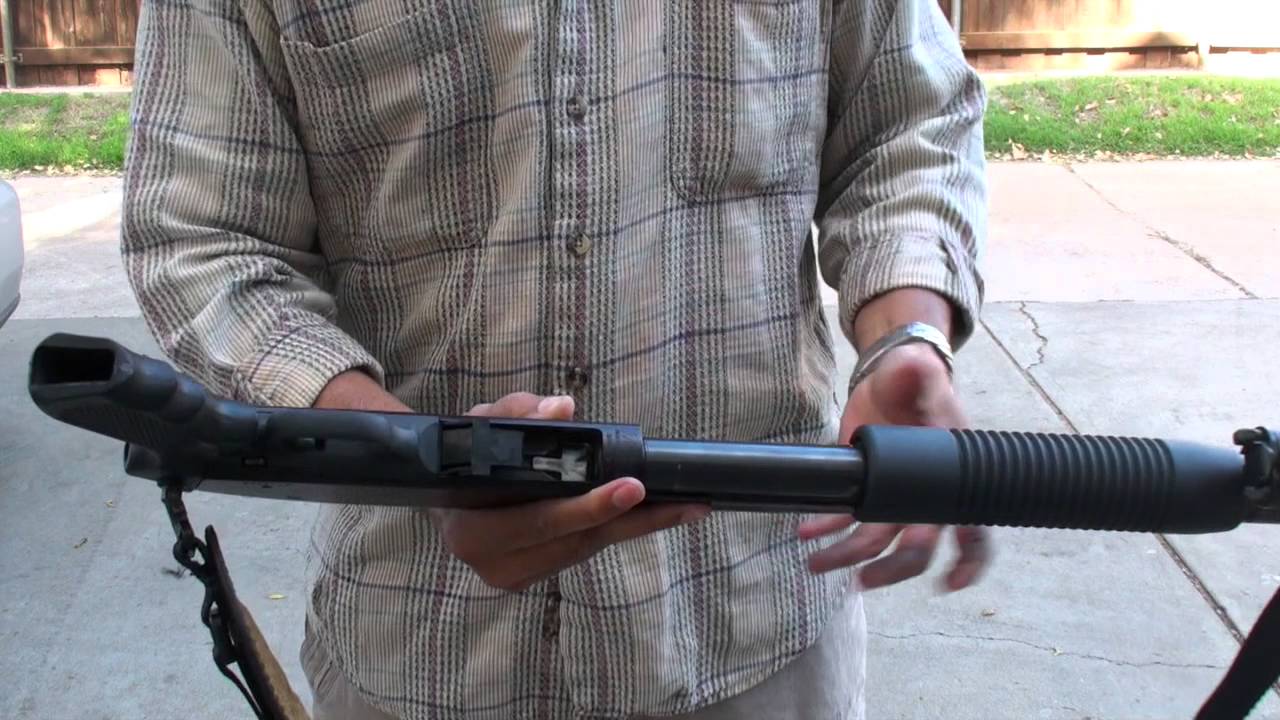
Home - OPSol® Mini-Clip™ (opsolmini-clip.com)
The OPSol® Mini-Clip™

The OPSol® Mini-Clip™ adapter was designed to give “well seasoned” and “recoil sensitive” shooters the capability of shooting the trusty Mossberg® 12ga platform without the usual recoil response.
By using The OPSol® Mini-Clip™ in conjunction with 1.75” shotgun shells, shooters stay in the game without all of the pain.
3 Likes
Will be seeing how it feeds those mini shells for sure!
30 rounds of home defense 12ga anybody?
1 Like
I don’t have any experience with them. All my shotguns are semi auto which are not compatible from what I have read. I did see that the new Mossberg 590S is designed to run mini and/or normal length shells reliably without an adapter.
The mini slugs should work about the same as standard length low recoil slugs. Though they are likely to have the same over penetration concerns.
The tests I have seen with mini shell buckshot tend to show pretty poor patterning even at relatively short ranges.
2 Likes
I was thinking 30’ at most, down the hall and across the living room.
I will have to watch some of those. 
1 Like
I can’t remember exactly where I saw the tests but for several of the buckshot brands tested the patterns were disturbingly wide even at just 30’.
2 Likes
Paul does pretty well with the Shorty’s.
He’s shooting at 15yds.