Car modifications for Safety?

November 2020, USCCA posted a topic, “Car Dump: Keeping your self safe in the car” (link attached below).

With some interesting posts this recent September on Disaster Preparednes and the scary and severe storm our east coast recently sustained. Got me wondering, what are some of the modifications we have made to our vehicles to help us in an emergency?

Not necessarily emergency kits which are useful as discussed in the other threads, but what changes have you made or would be interested in making to your car? Or even extra/special gear?

One of my concerns is balancing a minimalist approach in case of theft, with having at least some more preparedness. I picked up a few radios which are portable and can easily be removed to the home when not in use in the car.

Tip: buy used or 2nd hand where you can if nothing is wrong with it; comparison shopping finds bargains

For me, budget and space are a limiting factor.

Ideas I’d like to pursue:

  • Investing in a good set of winter (snow) tires
  • A battery-operated heater
  • Winch
  • Heavier duty bumpers

Some things I have already added are:

  • A compact (GMRS) radio with weather channel - got my FCC license
  • A walkie talkie (FRS) with weather channel
  • Compact CB Radio with weather channel
  • Paper maps for my and surrounding states
  • Extra lighting at the top of my windshield on my 4x4, to be seen better in rural areas and to shed some more light on dark roads
  • Red interior lighting to maintain my night vision
  • Tools & flat tire patch/fix kit
  • FAK
  • Extra water
  • Bug out bag
  • Solar panel

You all made any mods on your car related to safety?

Related thread link:

5 Likes

Seems like you are off to a good start @burdo.

I work in the middle of nowhere sometimes for extended periods of time. I occasionally need to be able to self rescue and repair and more often rescue stuck coworkers and other travelers. Plus I often have to camp out for a week or more at a time. So the list of gear in my vehicle is too long for me to list here.

A few pieces of gear that you might want to add to your list that are not too pricey but I have seen come in handy on more than a few occasions:

Lithium battery jumper pack, I have had good luck with the NOCO brand. That way you don’t need to find someone to jump your vehicle if the battery dies. Also allows you to help jump other vehicles without having to put yourself and your vehicle in as compromising a position in case the people you are helping turn out to be up to no good.

Air compressor that hooks directly to your battery. The cigarette lighter ones take forever to fill up a tire and patches are no good if you can’t fill up the tire after you fix the leak. Plus it lets you air your tires way down for soft sand and fill them back up when you get back on pavement.

Mylar sleeping bags. Will keep you warmer than those cheap mylar blankets but are still a lot cheaper and take up way less space than a normal sleeping bag. Though full on sleeping bags are a good idea in cold and snowy climates. Not sure a battery operated heater would last very long, or even work at all, for keeping a vehicle warm but battery operated hand warmers inside a Mylar bag would keep your core fairly warm for 4 to 8 hours depending on the brand. Adding a thin breathable polyester sleeping bag liner inside the mylar bag will make it a lot more comfortable.

Full size spare tire. A lot of cars only come with patch kits these days but even a high quality patch kit can’t fix a gash in the side wall. Some cars that come with no spare or one of those not overly useful spare donuts actually have room to fit a full size spare.

A 2’x2’ piece of 1” thick plywood to put under your jack to keep it from sinking in mud or sand.

A piece or preferably two of old carpet to put under the tires if you get stuck in sand, mud or ice.

Road flares. Emergency triangles are good to have for the day or if the flares run out but I’ve seen people run those over and almost hit the stalled car. Everyone gives the flaming flares a wide berth. They can also be used to start a fire or to clear a path through an angry crowd. Good to have a fire resistant glove in the flare bag for those uses.

If you can’t afford or don’t want to go through the hassle and added weight of installing a powered winch, they sell mechanical come alongs for pretty cheap that can help get you unstuck if you can find something to attach to within reach. A tow strap can extend the reach. There is a trick you can find on the internet for using a tow strap and a buried tire to winch yourself out of deep sand even without a come along or winch.

2 Likes

All good ideas above. I drive a lot for work myself, usually about 30,000 miles a year. It used to be about 40K. I carry most of the things Shamrock mentioned, plus much of Burdo’s stuff. My main ideas are

  1. Always know where you are and how to get out. For that I have old fashioned Garmin GPS (a main unit and a backup). No relying on the phone for navigation. Also, good old paper maps. I have a steering compass on the dash (my boating habits may have influenced that- I can’t stand not seeing the exact direction I’m going at all times).

  2. Be able to get help and information. For that I have permanently installed radios; CB and GMRS. The GMRS can scan a lot of the UHF and VHF bands, plus weather. And, of course, a phone, but again, I don’t trust those. Verizon was down in my area for 24 hours post Milton just this week.

  3. Be able to get un stuck and moving, if at all possible. I drive an old Tahoe 4x4. I’ve upgraded the tires and suspension, but otherwise it’s stock. I also carry tools and spare parts to fix a ton of stuff in the field. Anything that I can repair roadside and could kill the engine, I have spares, like ignition parts, belt, etc.

  4. Be ready to camp if you have to. Water, snacks, blankets, towels, first aid kit, etc. I actually have a 12V mini fridge in the truck. Have a tarp or two, lines, bungee cords and anything else that could help you survive or stay dry. I’m thinking, say, you’re driving in a remote area, wreck, and you need to hunker down because no one knows you’re there yet.

  5. I also pretty much always have a .38 revolver on me, so I have a spare box of .38 ammo in the truck. The last thing I want is the be stuck out with just my EDC load out.

4 Likes

Is there a tent you recommend for the road along with your camping gear? I would think some type of dome shaped small structure which can withstand high winds and driving rain, but I am no expert here, but have sailed extensively. The most efficient spray-dodgers on a sailboat are shaped somewhat like a half-moon to withstand high winds and driving rain and sea-spray. Of course, they have solid attachment points, which may be a challenge with a tent.

3 Likes

The radios are great. All of the ideas are great. My only thought… in the event of an EMF, none of the electronics, including automotive computer modules will be worth a plug nickel if not in a Faraday cage. That said, it is a great advice.

2 Likes

I actually don’t have a tent in the truck. My main plan would be to camp in the truck itself. The Tahoe is big enough to provide a good sleeping space if necessary. If my truck is destroyed, and I need some kind of shelter, I’d use my tarps and lines to rig a shelter, as they’re likely to survive a crash, of course.

Having said that, your idea of carrying a tent is smart, and something I might add to the equipment list. There seem to be any number of nice compact tents that could fit the bill. I’m in Florida, so keeping warm isn’t usually an issue, just dry, depending on time of year.

3 Likes

One thing to consider and check out. Motors stop running in high water most often because the exhaust is blocked. That why you see the periscope exhausts. Also in the snow have a way of cleaning the exhaust of snow. Carbon monoxide will build up in the vehicle and kill you unless it can be vented away.

2 Likes

Green is better.

3 Likes

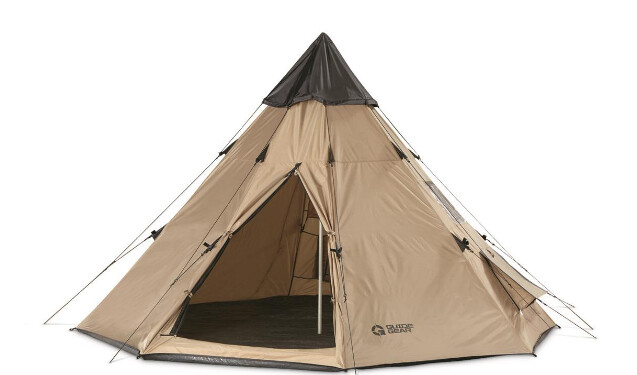
This is the last one I bought for Nancy and I.

Just 8 stakes and a pole if you have to and you can lower the pole for a better profile.

Guide Gear 10’ x 10’ Teepee Tent - 712644, Camping Tents at Sportsman’s Guide (sportsmansguide.com)

Key Features

  • New and improved design
  • 190-denier polyester tent body material
  • 1,500mm waterproof coating
  • 3 windows
  • Sewn-in polyethylene floor
  • Factory-sealed seams
  • Rain-protected ventilation in peak and multiple ground air vents
  • Center-zip door with no-see-um-mesh
  • Sleeps 2 people, plus room for gear

View full specifications

4 Likes

I will do this also. I usually carry 2 mags on me and 2 in my EDC bag,
7 or 8 round each.
An extra box of ammo for each pistol I may carry is a good Idea. Thanks. :+1:

3 Likes

looks like a nice tent… a report after use would be great!!!

4 Likes