I have never explicitly tried to take a shot on the second every second.
I commonly do a drill, 10 yards, 10 rounds, NRA B8 target (5.5" circle), that has a par time of 10 seconds (can do a lot better with some guns) so I’m fairly familiar with what a shot per second (via shot timer record) is, though.
IN terms of a failure to stop drill I think a full second between shots is pretty slow
He was using this as a way of getting used to shooting 10 rounds and then picking up the pace. If you didn’t shoot 10 for 10 in your designated center area, you repeat until you do. Then go faster until you don’t go 10 for 10.
This is something I will incorporate into my practice routine. I want to train myself to not panic shoot and mag dump before I realize I did.
If you look at my last target I put on “show me your target”, I ate out a big hole in the bullseye at 7 yards. I’ll step back to 10 yards next time and post how I did.
I’m doing “Failure-To-Stop” drill each time I’m on the Range. I actually don’t like to use term “Mozambique Drill”, since I don’t train nor practice shooting the head (as a civilian).
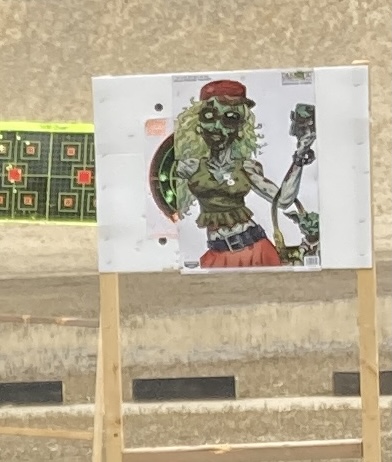
What I’m doing is to draw two additional areas (square or circle) next to the head area, just above shoulders. This way I have 3 small target that I’m using as a precise shot after hitting center mass. Almost the same outcome, just different thinking.
My goal has been always to keep cadence, so maximum time for 3 or 4 shots shouldn’t exceed 2 seconds, drawing from the holster.
Sometimes it’s easy, sometimes it’s not. I always prefer hits over the speed so actually my focus is on the trigger press and muzzle flip that can be used to align sights (or red dot) with small target.
I love shooting multiple targets, doing this dynamically, so counting while shooting is a perfect tool for keeping the rhythm and actually shoot faster.
I don’t like to use term “Mozambique Drill”, because it’s specific to 2 in the chest, one in the head. I prefer “Failure-to-stop” because it means that you aim and shoot the area that will permanently stop the threat, once shooting the center mass failed.
I do not train / practice shooting the head. I don’t feel confident enough shooting small randomly moving target, when I have better options giving me confidence. Additionally, as I mentioned some time ago, shooting the head as a civilian brings too many questions that sometimes can be hard to answer.
yeap. That’s what I posted some time ago.
We eventually act in stress the way we train. I train the way that I want to defend myself in certain situations.
So far I never found needs to shoot into the head. Never during the classes, never during simulation scenarios, never during force-on-force sessions.
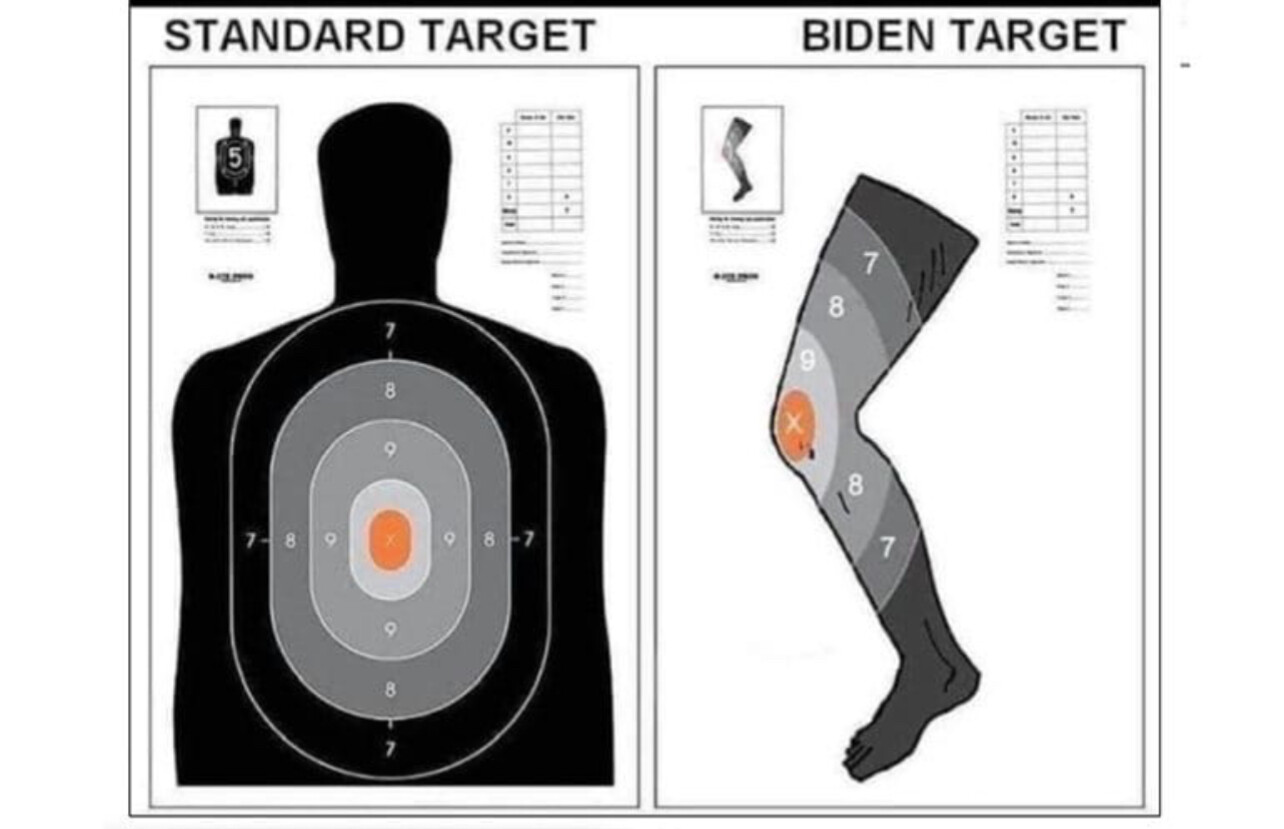
If someone is, for example, trying to shoot you or another innocent, a pelvic shot may not stop them right now. Even if if puts them down immediately, down isn’t the same as out…people do sometimes continue to pose an immediate deadly threat while on the ground (they can still shoot)
The pelvis also will not always be a viable target, they might be a threat with their lower body ,including pelvis, blocked by something, like maybe they are shooting you from the other side of concrete divider or barricade, or standing on the other side of a vehicle hood that comes up to their gut, etc.
You can’t guarantee you will always have access to shoot at pelvis or that a pelvis shot will immediately stop the threat. The head is more guaranteed of those things (I wouldn’t completely rule out either one as a training option)
I can’t find it, but there is a video example on the ASP channel. I think from Brazil (of course), but it’s in a small store, where the aggressor/robber is shot and goes down…but not out…as he is still pointing his gun menacingly while lying on the ground and needs shot more. There are others I’ve read about or seen but I don’t how to even begin to find them. But there is at least one example from the real world on ASP where down does not equal out
Or if you’ve been a member long enough and keep the magazines you can pull up the physical from your pile
An excerpt for consideration
"HIP TO CHANGE
Most armed citizens have heard of the “Failure Drill” (formerly the “Mozambique Drill.”) If a controlled pair of shots to the chest fails to immediately stop the threat you face, shoot one round at the head. A bullet that hits the head and penetrates the skull deep enough should end the fight. However, the head is not as easy of a target to hit as you might think. Real fights are not the same as shooting paper at the range. People move in real fights, and it doesn’t take much movement to move the head
off of your line of fire. As such, a better secondary target might be the pelvis.
The pelvis is responsible for providing the stability necessary for standing, walking and running, and sufficient damage to it makes the aforementioned activities all but impossible.
The key here is sufficient damage: It may take more than one hit to do enough structural damage to immobilize your attacker. As always, shoot until the threat has ended. A catastrophic fracture of the pelvis, while it should immobilize your attacker, might not end the threat he or she presents.Your attacker can still shoot you from the ground, but from there, a headshot becomes a lot more viable, as the head isn’t able to move as much.
If I were attacked by someone with a contact weapon, such
as a knife or a baseball bat, the pelvis would be my primary
target. Bear in mind that shooting at the pelvis is still deadly force since death or great bodily injury is a likely outcome.
(EDITOR’S NOTE: Firearms are always deadly force, regardless
of your target.) Atop that, all of the factors of ability, opportunity and jeopardy still need to be present as with any other
self-defense shooting"
I was just thinking that. As can be seen on ASP, a person can go down, regain the blood pressure, reanimate only to shoot and kill the defender. A head shot doesn’t allow the bad guy to reanimate and kill you.